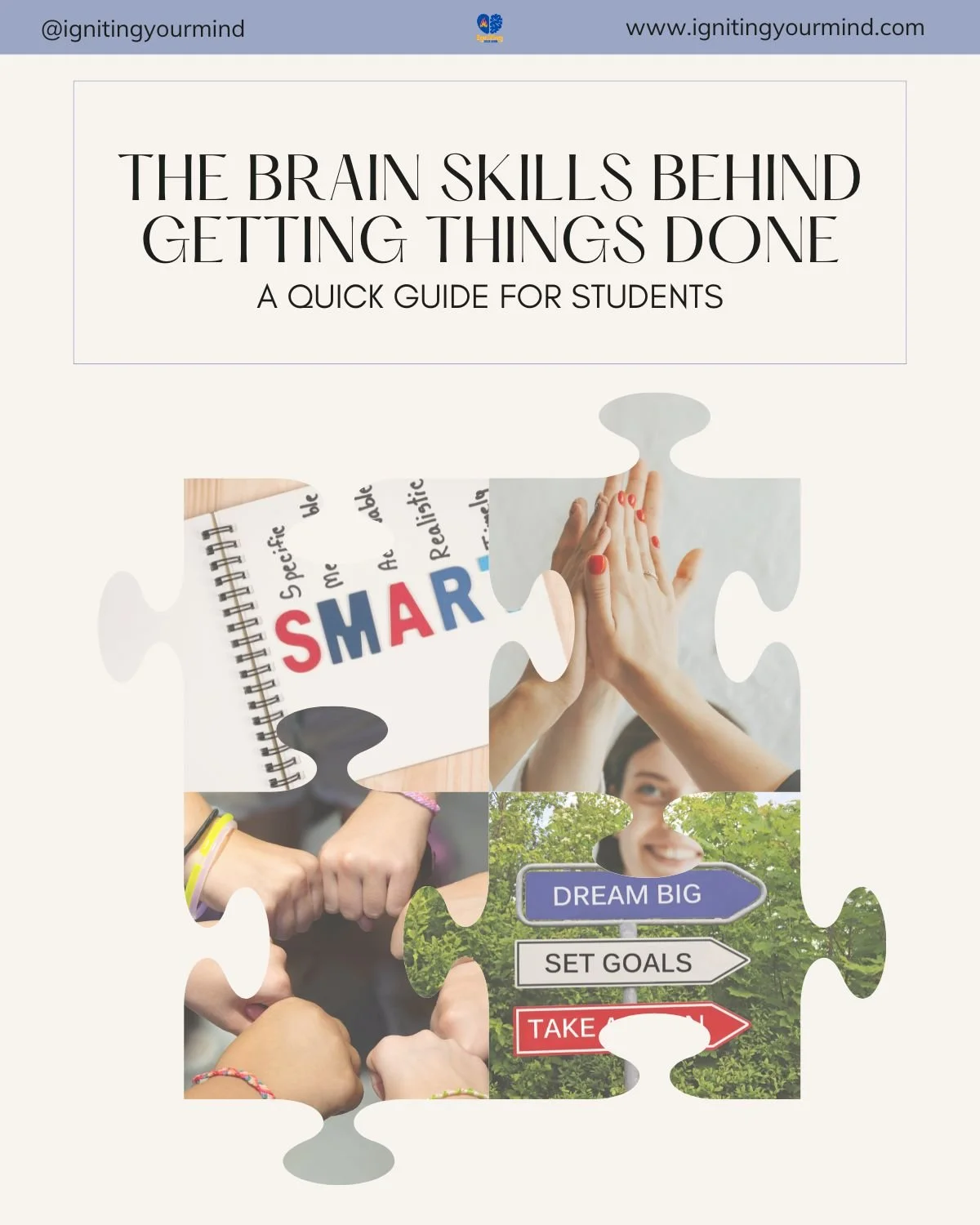
This guide is not a planner. It's not a checklist. And it's definitely not another lecture about why you need to "just try harder" to be on time.
Time Management for ADHD Brains is a research-based, teen-adapted workbook built around 19 strategies from two of the leading voices in ADHD coaching and psychiatry — Dr. Edward Hallowell, M.D. and Sandy Maynard, M.S. Every tip comes with the science behind why it works, not just instructions to follow it blindly. Because ADHD brains don't do well with "just because" — they need to understand the why before the how clicks into place.
A note before you dive in — this guide assumes something important.
Time management is a skill that gets built in layers. Before you can learn how to manage time, you first need to have developed a foundational awareness that time exists, moves, and can be planned around. That means:
You can feel the difference between "five minutes" and "an hour"
You understand that future events are real and coming, even when they feel abstract
You have enough self-awareness to notice when you're off-task, even imperfectly
You've started to connect your choices now with outcomes later
If those foundational pieces aren't yet solid, this guide will feel frustrating rather than helpful — and that's not a failure, it's just information. Building time awareness is the prerequisite work, and it deserves its own focus before creative time management frameworks can land.
If you're working with a coach, parent, or therapist, this is a great conversation to have before starting: "Do I have the foundational awareness I need to practice these strategies?"
Once that foundation is in place, this guide gives you the creative frameworks ADHD brains actually respond to — body doubling, gamification, chunking, inner voice rewiring, and more — paired with real write space to make every strategy personally yours. Because the research is clear: strategies that stay on a page don't change behavior. Strategies you wrestle with, reflect on, and commit to in your own handwriting? Those have a real chance.
This is the guide for teens who are ready to build the next layer.
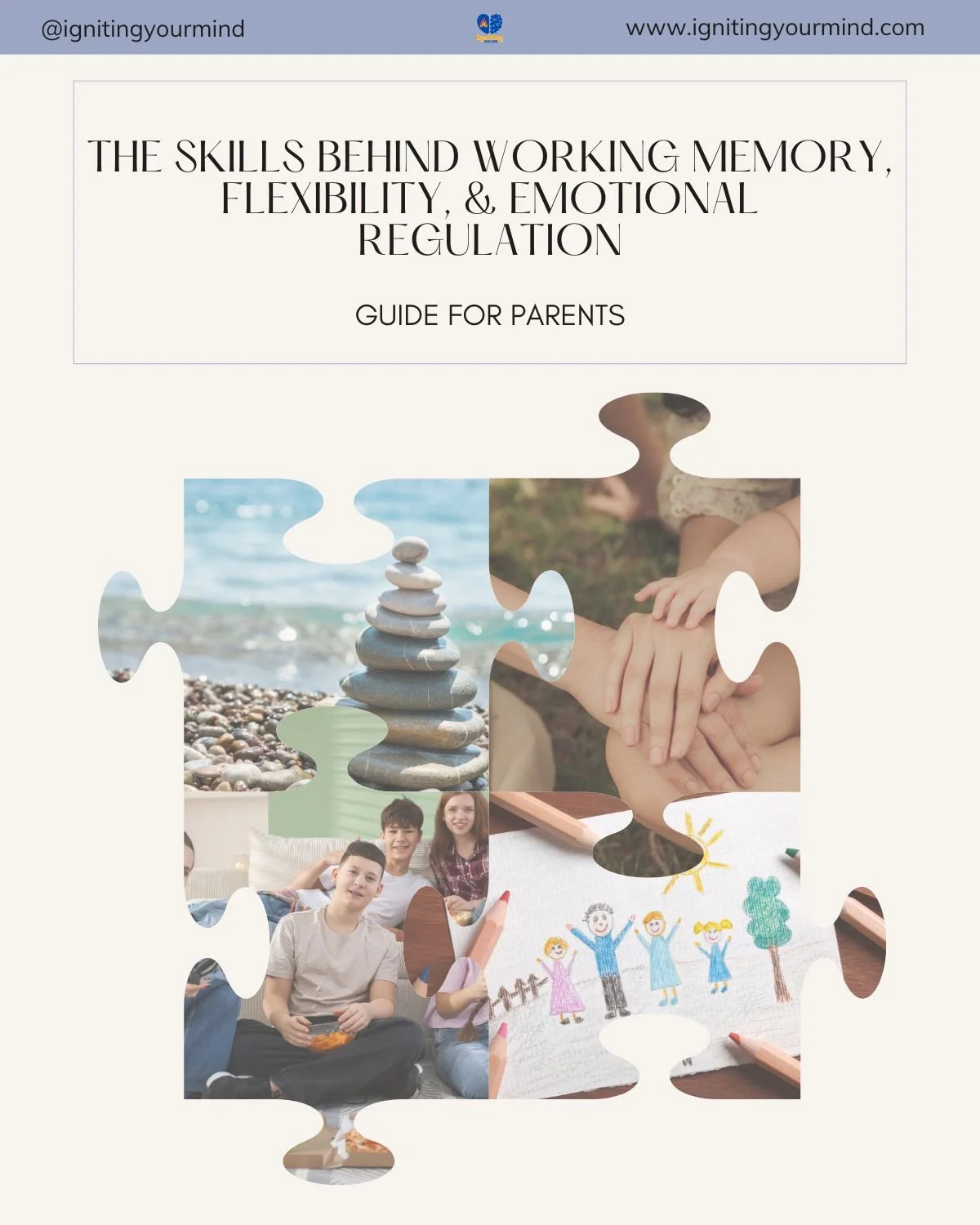
Reflexive questions help kids pause and think instead of relying on someone else to tell them what to do. Instead of giving answers or constant reminders, these questions guide kids to notice, plan, and problem-solve on their own. Over time, this builds self-awareness, independence, and the ability to manage situations without external prompting. It shifts the focus from compliance to thinking, which is where real executive function growth happens.
Looking for something meaningful to do with your child that goes beyond worksheets and busy work?
This interactive activity is designed to help your child understand how their brain actually works and how they can grow their intelligence over time. Through reading, drawing, and discussion, your child will begin to see that their brain is not fixed, it can grow and get stronger with effort and practice .
This isn’t just an activity. It’s a conversation starter.
Together, you’ll explore:
How the brain grows and changes with learning
Why effort and practice matter
How challenges actually help build stronger thinking skills
What it means to “get smarter” over time
The built-in drawing and reflection pieces make it engaging and help your child actually process and remember what they’re learning, not just read it and move on.
It’s simple to use, easy to implement, and creates a natural opportunity to talk about effort, frustration, and growth in a way kids can understand.
Perfect for summer when you want to keep learning alive without it feeling like school.
Who This Is For
This Workshop is for any parent who feels like summer is the season everything falls apart. If your child needs constant prompting to start anything, fills every unstructured hour with screens, seems to have ideas but never acts on them, or shuts down the moment the school routine disappears — this was built for you. You don't need a diagnosis to be here. You just need to recognize your kid in that description.
This is especially valuable for parents of children with ADHD, executive function delays, or any neurodivergent learner who thrives with structure and struggles without it.
What You'll Learn
By the end of our time together you'll understand why summer is genuinely hard for prompt-dependent kids — and why the strategies you've been trying haven't stuck. You'll walk away knowing how to build a light, flexible structure that holds without turning into a power struggle, how to use chores and real responsibility to actually build executive function, how to handle screen time in a way that's routine-based rather than reactive, how to help your child tolerate boredom and fill tech-free time without you doing the work for them, how to support real-world friendships and in-person connection, how to keep their brain engaged over the summer without it feeling like school, and exactly what to say in the hardest moments — with scripts you write in your own words during the session.
Thursday, May 22 · 1:00 PM EDT
Can't join us live? No problem — the full recording will be sent to every registrant, and this workbook is designed to work just as well on your own time.
Same strategies, same scripts, at your own pace.
Your registration includes the live webinar AND your personalized companion workbook… a fillable, interactive guide you'll work through in real time during the session. Most parent workshops leave you with notes you never look at again. This one leaves you with a completed, personalized summer plan in your hands…ready to use the moment school ends.
The 16-page workbook alone is worth the price of admission. Together, they give you the framework, the scripts, and the structure to make this summer genuinely different for your family.
All of this for one small registration fee.
Live webinar · Interactive companion workbook · Full recording sent to all registrants
Every summer, the same thing happens. School ends, structure disappears, and kids who held it together all year suddenly can't seem to do anything without being asked seventeen times. The screens take over. The waiting starts. And by mid-July, everyone in the house is frustrated.
If that sounds familiar, you're not missing something as a parent. Your child's brain is missing a scaffold — and summer just removed the last one it had.
This free starter guide introduces you to the why behind prompt-dependent and EF-delayed kids, and gives you a clear, research-backed starting point for building a summer that actually works for your family. In just two pages you'll learn why unstructured time is genuinely hard for these kids (not an excuse — a neurological reality), the three pillars every summer needs to support executive function development, and what authoritative parenting looks like when your child needs more than reminders and consequences.
It won't solve everything — and it's not meant to. Think of it as the first conversation. A way to finally have language for what you've been experiencing, and a direction to start moving in.
Whether you're ready to go deep or just getting started, this guide will shift how you see the next three months.
Already want more? The Summer Blueprint live webinar goes further — covering structure, screen time, chores, boredom tolerance, friendships, the summer slide, and scripts for the hard moments. You'll build your family's personalized summer plan right in the session and leave with something real in your hands. Details on the webinar are inside the guide.
Download free. No commitment required. A better summer starts here.
Executive function coaching is a little different from tutoring or therapy.
We are not here to reteach school material or to talk through feelings the way a therapist might. Our job is to help you build the skills that make life easier to manage over time. Things like starting tasks, staying organized, managing stress, and following through on responsibilities.
The goal is not for you to rely on a coach forever. The goal is for you to learn how to do more of these things on your own.
Executive function is one of the most misunderstood areas of child development. It’s often reduced to organization and time management, when in reality it drives how kids start tasks, stay on track, manage emotions, and follow through. This guide breaks it down in a clear, practical way so you can understand what executive function really is, why your child may be struggling even when they “know what to do,” and how the right support helps build lasting independence.
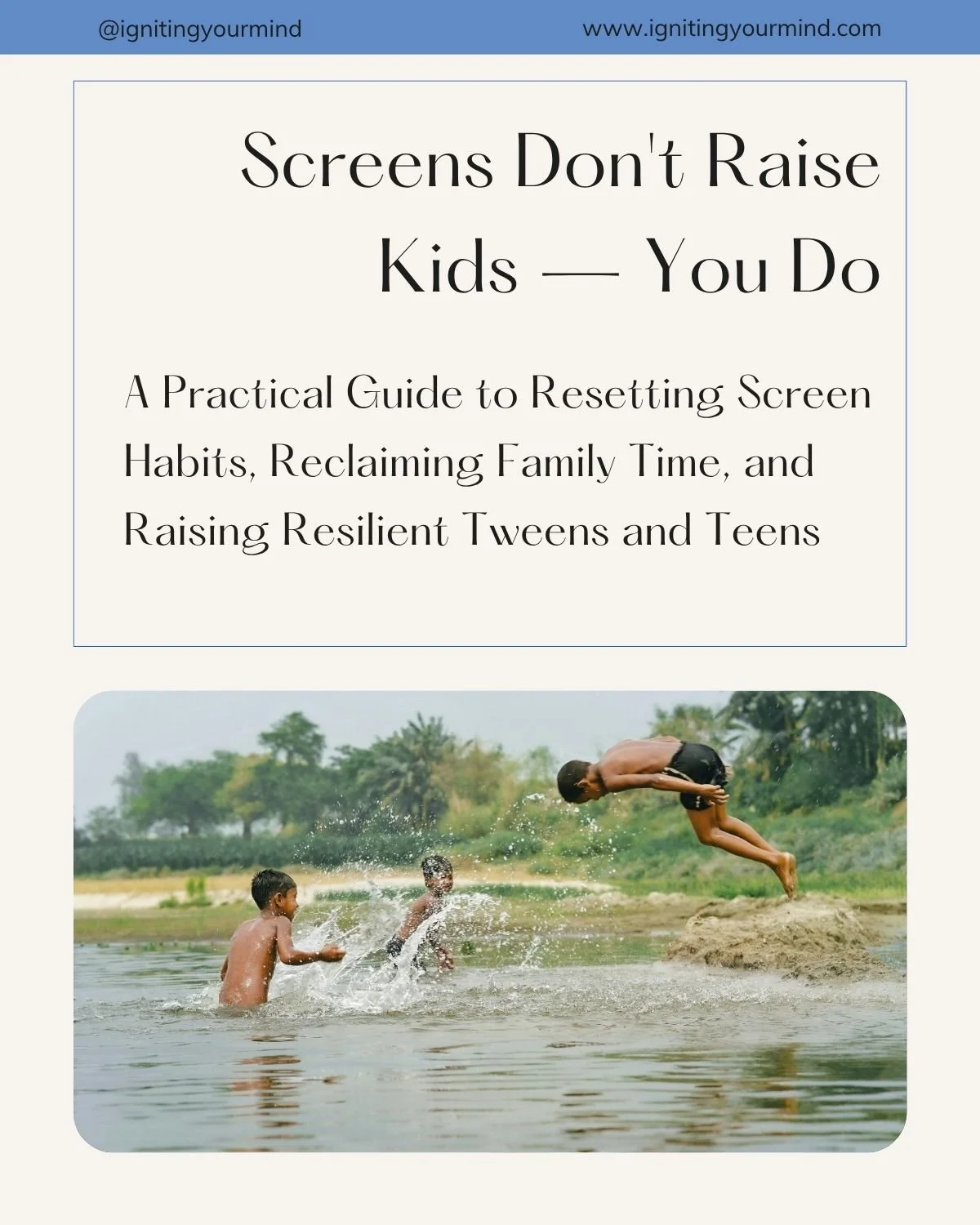
A Practical Guide to Resetting Screen Habits, Reclaiming Family Time, and Raising Resilient Tweens and Teens
You’ll likely see parts of your child in different sections, and that’s the point. This guide is here to help you step back, make sense of what you’re seeing, and start making small, intentional shifts in how screens are showing up in your home.
You don’t need to implement everything at once. In fact, trying to change too much too quickly usually doesn’t stick.
Start with what stands out to you most. Maybe that’s sleep patterns. Maybe it’s the after-school routine. Maybe it’s the level of pushback you’re getting when screen time is over.
Use the education in this guide and reset plan as your starting point, and come back to this as needed. As things shift, you’ll likely notice new patterns and areas to adjust.
Over time, small, consistent changes are what lead to real, lasting progress.
Mindfulness and meditation are often presented as go-to strategies for stress, anxiety, and overall well-being. And for some kids, they truly help.
But for others, especially those carrying trauma, high anxiety, or sensory sensitivity, being asked to sit still and turn inward can feel anything but calming. It can actually increase discomfort, agitation, or emotional intensity.
This guide takes a closer look at why that happens. It unpacks how trauma and nervous system differences can shape a child’s response to traditional mindfulness practices, and why those approaches are not one-size-fits-all.
More importantly, it offers practical, approachable alternatives. Strategies that support regulation without requiring stillness or silence. Tools that meet kids where they are, helping them feel safe, grounded, and more in control without forcing a method that does not fit.
Because regulation is the goal. The path to get there can look different for every child.
On-demand guidance when something feels stuck
The Clarity Corner is designed for those moments when something isn’t working, and you don’t want to wait weeks to figure it out.
Whether it’s a specific challenge with your child, a breakdown in routines, or uncertainty about what to do next, this gives you direct access to thoughtful, professional guidance right when you need it.
This is not ongoing coaching.
It’s focused, high-quality support to help you move forward with clarity and confidence.
What this can help with:
Breaking down a specific challenge or situation
Talking through options and next steps
Problem-solving around routines, communication, or organization
Navigating executive function concerns
Deciding what kind of support your child actually needs
You’ll receive practical, grounded guidance tailored to your situation, not generic advice. The goal is simple. Help you get unstuck and feel clear about what to do next.
If it turns out you’d benefit from more support, we can talk about that. If not, you leave with direction and a plan.
No long-term commitment. Just clarity when you need it most.
This guide helps parents understand how nutrition may support attention, mood, and regulation in children with ADHD. Inside, you’ll find research-informed information on nutrients that have been studied for their role in brain health, including omega-3s, magnesium, zinc, and other key micronutrients.
The guide explains what current research suggests, how these nutrients may fit into a comprehensive ADHD support plan, and when it may be helpful to discuss testing or supplementation with your child’s healthcare provider. It also includes practical food ideas for families who prefer to focus on nutrition through whole foods rather than supplements.
Designed to be clear and practical, this resource helps parents better understand the connection between nutrition and brain function so they can make informed decisions about supporting their child’s focus, regulation, and overall well-being.
Why Students Can Understand the Material but Still Struggle to Show It
I created this resource to give you more than just surface-level answers. It dives deeply into the research behind why some students can understand material but still struggle to show it, and it includes embedded links throughout so you can explore the studies, sources, and strategies in as much detail as you want.
Rejection sensitivity can hit hard at times, especially for kids with ADHD. Their brains are already working overtime to manage emotions, so even small moments of perceived criticism or exclusion can feel intense and overwhelming. It’s not overreacting. It’s a real response that can impact confidence, relationships, and willingness to try.
I created a guide to help you understand what’s actually happening and give you practical ways to support your child through it. You’ll learn how to reduce emotional spirals, build awareness, and teach strategies that actually stick over time.
Check it out here!
This guide is your go-to resource for understanding how protein fuels your child’s brain, mood, and focus, especially for neurodivergent kids who need steady energy and strong regulation skills. Inside, you’ll learn the science behind why protein matters, get simple and creative breakfast ideas, and find easy recipes your kids can help make. By involving them in the process, from choosing ingredients to preparing meals, you’ll boost their buy-in, build independence, and turn breakfast into a daily opportunity for connection and healthy habits.
What if your child’s outbursts, shutdowns, or avoidance weren’t signs of defiance—but signals of stress, unmet needs, or lagging skills? That’s the core idea behind Regulate, Reflect, Respond, a practical, research-backed resource for parents who want to raise emotionally resilient, self-regulated thinkers. This guide helps you move beyond behavior management and into true connection-based support, without sacrificing structure or accountability.
No results match your search. Try removing a few filters.